Case Study
Bausch + Lomb Training Rebuild
A full redesign of a 9-week new hire learning experience for Bausch + Lomb Surgical Customer Service, focused on stronger progression, better trainer support, and a more deliberate path from onboarding to job readiness.
Overview
This engagement focused on redesigning the new hire learning experience for the Bausch + Lomb Surgical Customer Service team. The work included onboarding optimization, training-content restructuring, facilitator support, milestone-based progression, and stronger alignment between training design and operational readiness.
Rather than treating the assignment as a simple content refresh, I approached it as a performance-enablement redesign: clarifying what the business actually needed learners and trainers to do, and then rebuilding the experience around those realities.
Challenge
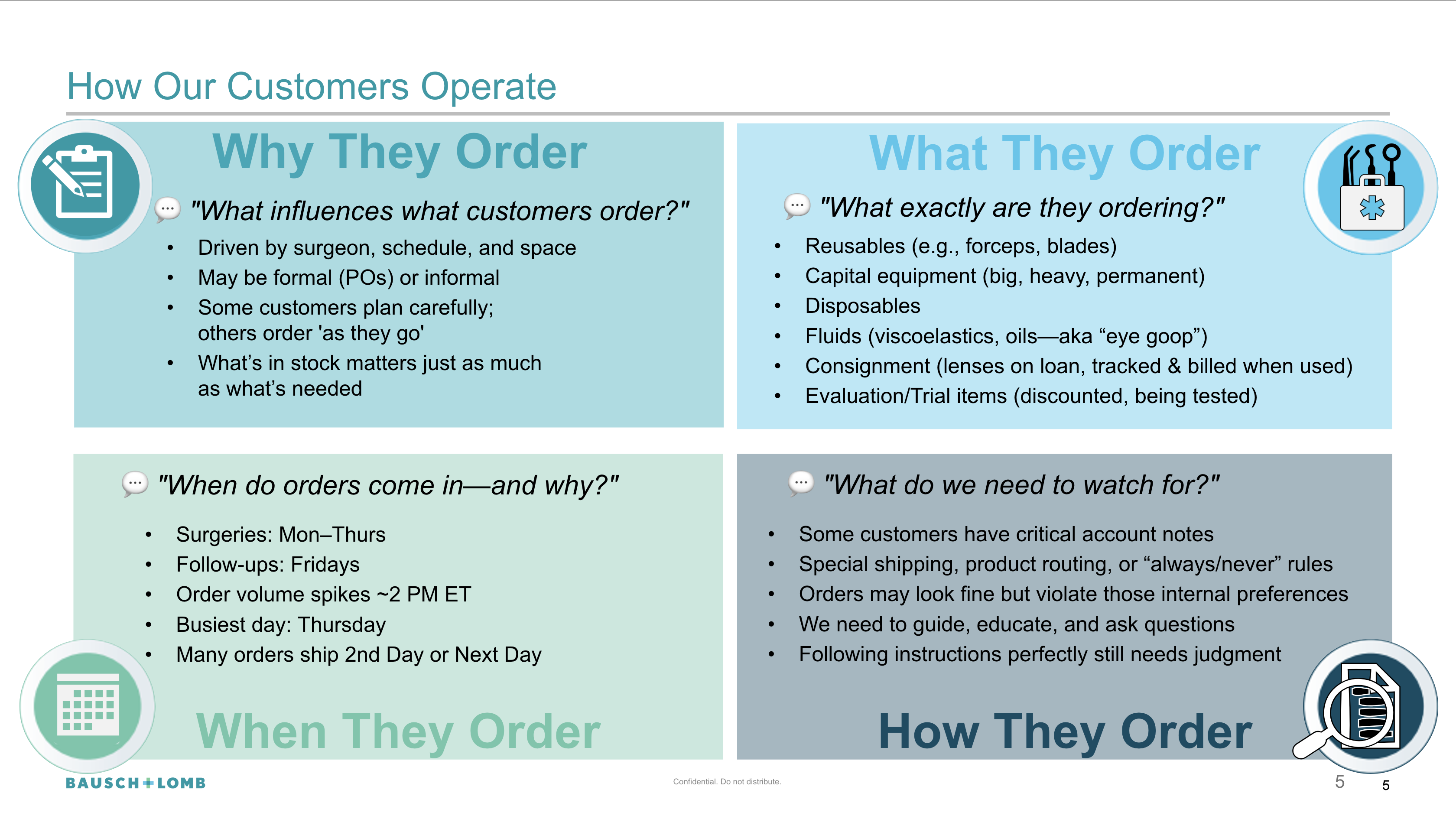
Training had evolved organically over time and had become too dependent on trainer memory, improvisation, and fragmented materials. Managers were delivering training alongside their operational responsibilities, classroom time leaned heavily on slide-based instruction, and structured assessment often happened too late to catch learner struggles before they affected live performance.
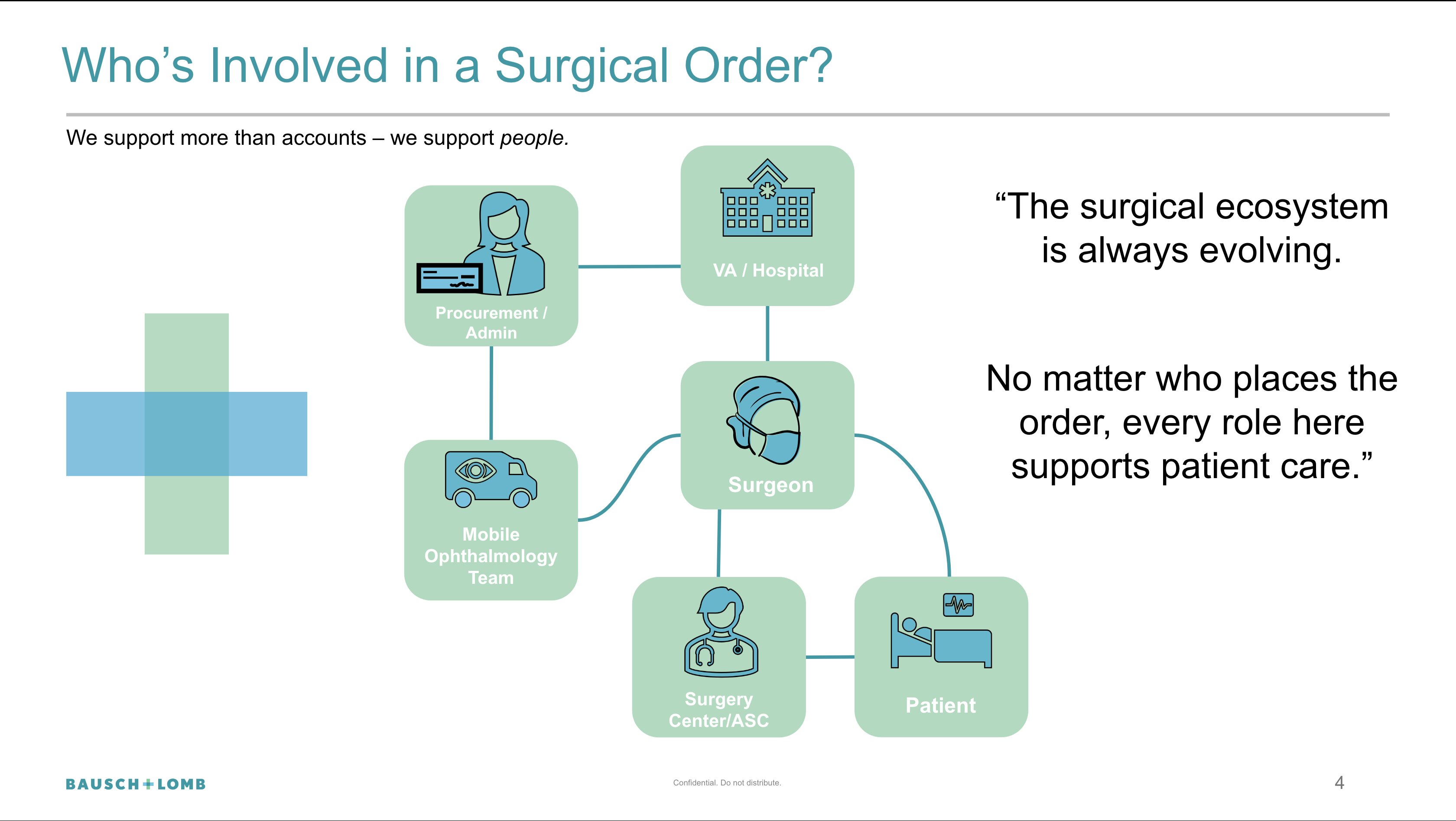
Because this was a surgical customer service environment, the stakes were higher than a typical back-office support role. Order accuracy, exception handling, and system fluency all mattered in ways that affected customer trust and patient-care logistics. The solution therefore had to build more than step recall. It needed to build judgment, sequencing discipline, and confidence in a role where precision mattered.
Approach
I approached the work as a performance enablement redesign rather than a slide refresh. The first step was diagnostic: reviewing scope documents, stakeholder discovery notes, and legacy or in-progress materials to identify where the real breakdowns were happening.
From there, I restructured the learning approach around a few core principles:
- progress from foundational context to guided application to independent performance
- move practice earlier and make it more frequent, especially in the systems learners would actually use
- embed assessment throughout the journey instead of waiting for performance issues to surface
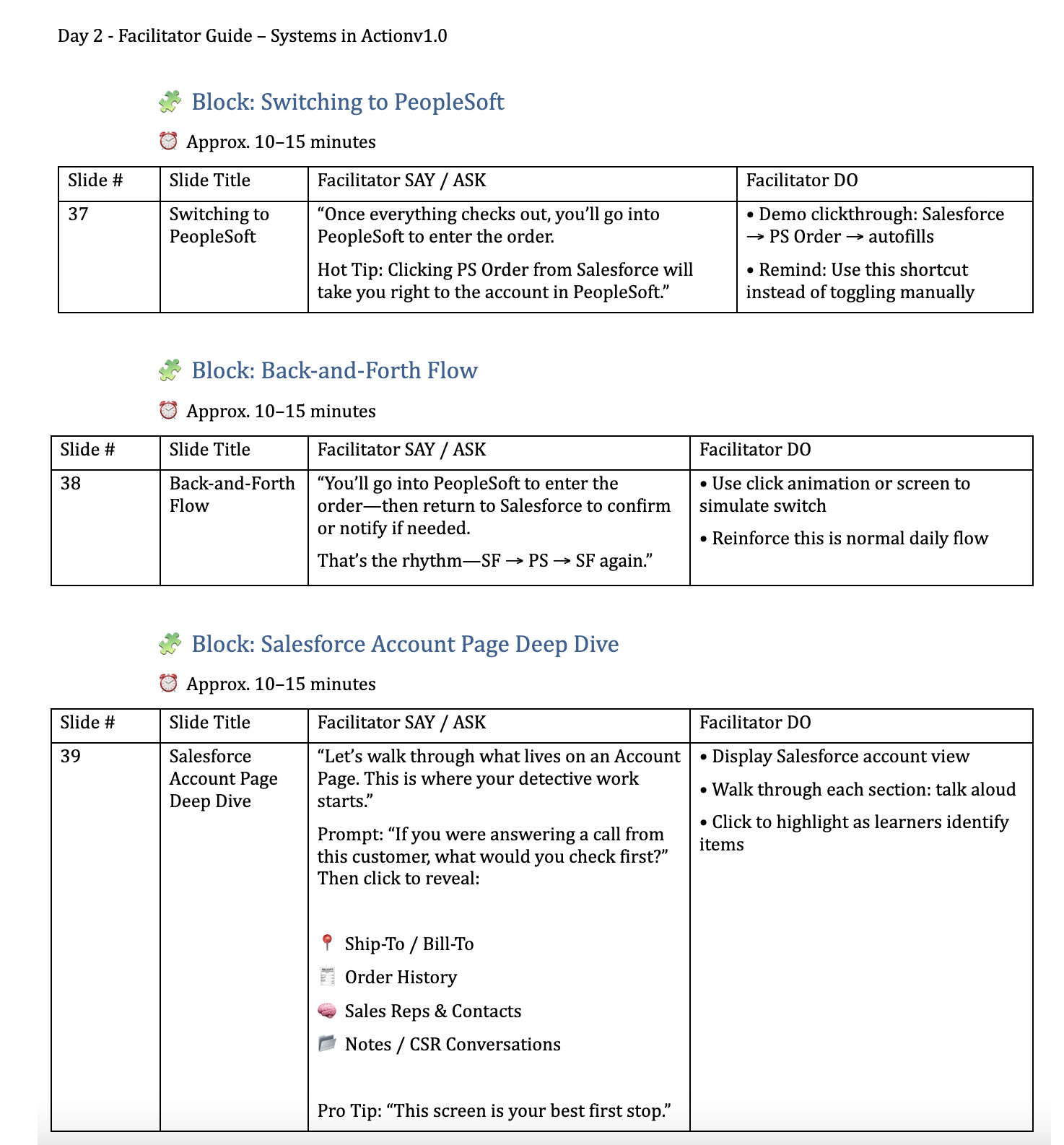
- build facilitator support directly into the materials so manager-trainers would not need to invent delivery strategy on the fly
Program Architecture

Solution
The redesign shifted the program away from passive content delivery and toward a more active, facilitator-supported, application-based structure. A major design move was distinguishing what belonged in orientation, what required guided practice, what needed to be revisited later, and what should become reference material rather than instructor-led content.
Across the program, the learning flow increasingly followed a scaffolded pattern:
- instructor framing
- guided walkthrough
- shared practice
- coached application
- live-work exposure with reflective debrief
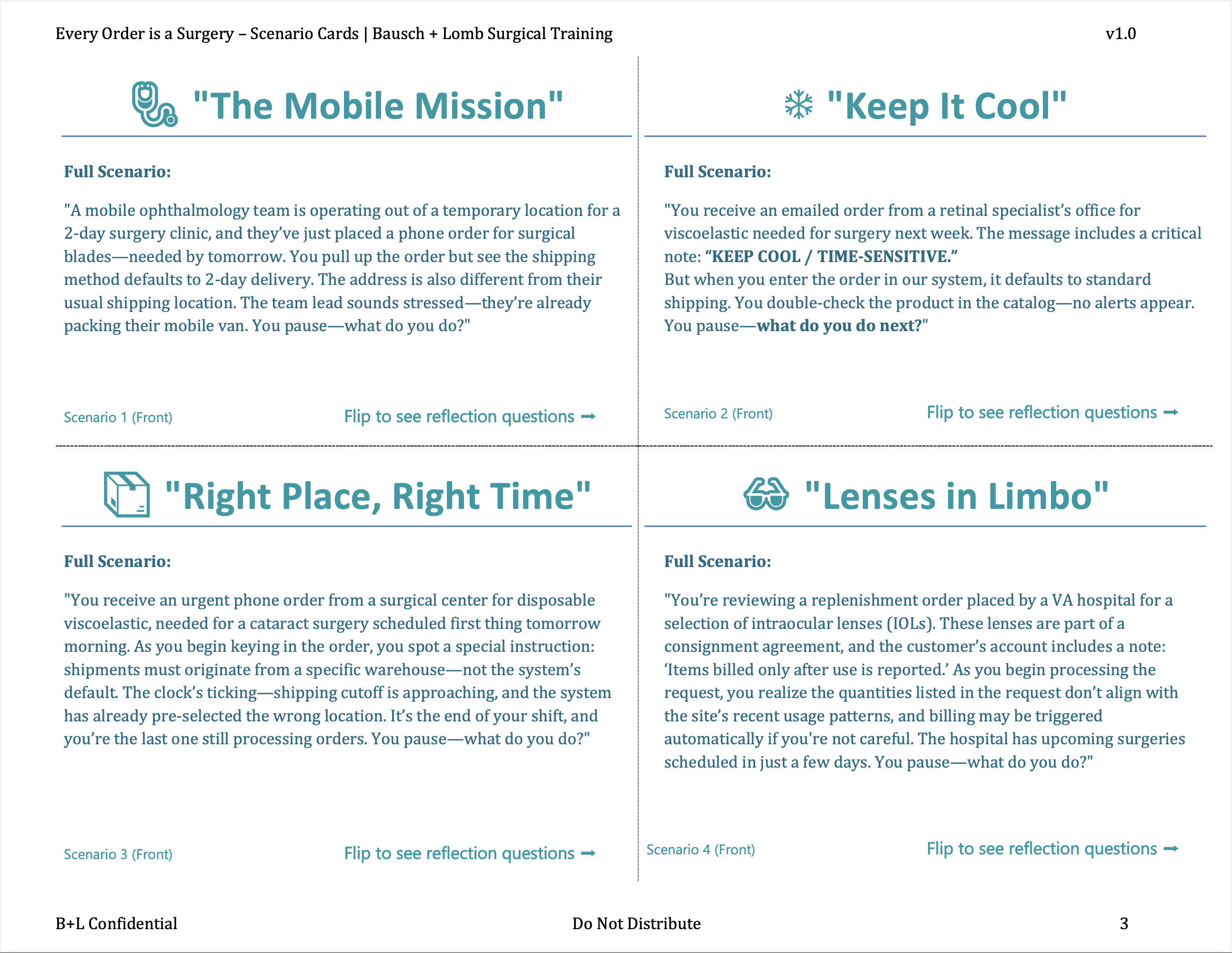
One especially strong example was the redevelopment of the consignment training sequence, which moved away from static explanation and toward a more structured progression of conceptual framing, system practice, exception handling, and reasoning in realistic scenarios.
My Role
I led the diagnostic and redesign effort, helping translate a broad sense that “training needs work” into a clearer performance and enablement problem.
My work included:
- curriculum restructuring across the new hire journey
- facilitator support design for manager-trainers
- milestone and progression planning
- onboarding readiness design
- interactive activity design
- alignment of training structure to real operational constraints
Use of AI
AI played a supporting role in this project as a design accelerator and collaborative tool. I used it to reduce blank-page time, generate early visual and activity ideas, explore alternate sequencing approaches, and speed up drafting for learning interactions and learner-facing explanations.
AI was not a replacement for instructional judgment, stakeholder collaboration, SME validation, or business context. The work remained human-led throughout. In practice, AI shortened the distance between concept and first draft, but the decisions about learning architecture, facilitation strategy, realism, and final fit still came from professional design judgment and collaborative review.
Outcome
The result was the foundation of a more mature learning system for new hires in a specialized, high-stakes environment. The redesign helped shift training from passive delivery toward scaffolded practice and readiness, reduced delivery variance through embedded trainer support, and created a clearer path toward milestone-based progression and onboarding readiness.
Although the engagement focused on design and optimization rather than long-term measurement ownership, the expected business value was clear: faster ramp-up, more effective trainer delivery, reduced process variability, stronger learner engagement, and a more reliable onboarding experience.
Selected Screens